How Much Does Architectural Visualization Cost in 2026? A Plain-English Guide
Published 2026 prices for 3D floor plans, interiors, exteriors and animation, what moves a rendering quote up or down, and how to brief a studio so the price you are quoted is the price you pay.
In this article
- What studios are charging in 2026
- Why two fair quotes can be far apart
- 1. How much has to be built around the building
- 2. Level of detail and custom content
- 3. The quality of what you send
- 4. The number of views
- 5. Revision rounds
- 6. Turnaround
- How studios usually price the work
- Freelancer, local studio or offshore team?
- Is it cheaper to do it in-house?
- How to get an accurate quote
- Ways to spend less without lowering quality
- Red flags in a quote
- How Architive quotes
- Quick answers
- How much does an architectural rendering cost in 2026?
- How much does an architectural animation cost?
- How much extra is a rush job?
- How many revisions are included?
- Why do quotes for the same project differ so much?
Architectural visualization in 2026 usually costs somewhere between $250 and $8,000 per image, and more for animation. That spread is real, not padding: a 3D floor plan, a furnished interior and a tower in a modelled city block are very different amounts of work. Below are the prices studios actually published this year, what moves a quote up or down, and how to brief a project so the number you are quoted is the number you pay.
What studios are charging in 2026
These ranges come from Maverick Frame's 2026 pricing guide, updated in July 2026. They are a studio's own published rates, so treat them as a benchmark rather than a rule, but they line up with what architects report paying.
| What you are buying | Published 2026 range |
|---|---|
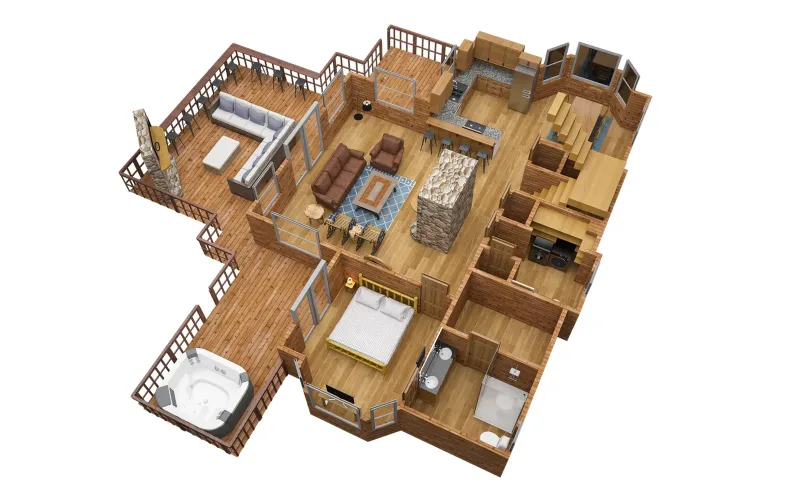
| 3D floor plan | $250 to $1,200 per plan |
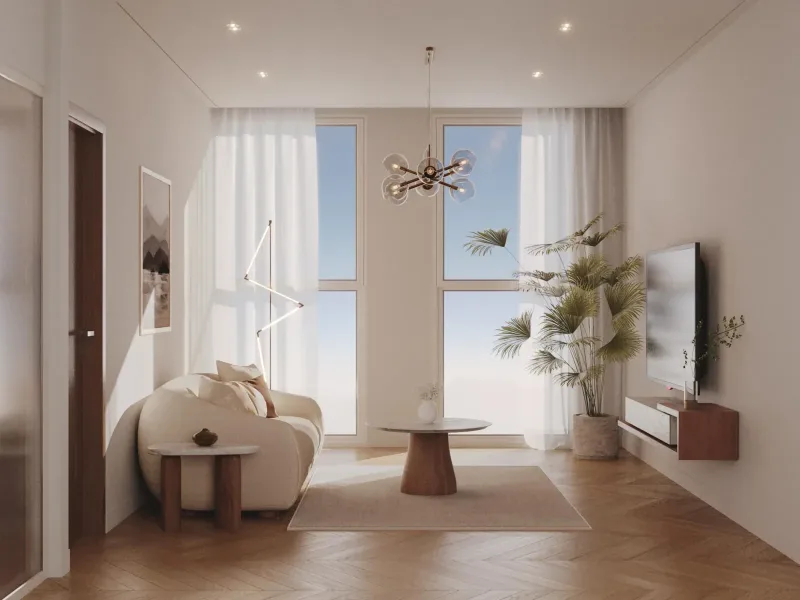
| Residential interior view | $600 to $1,800 per view |
| Family house, 3 to 5 exterior views | $1,200 to $4,500 per package |
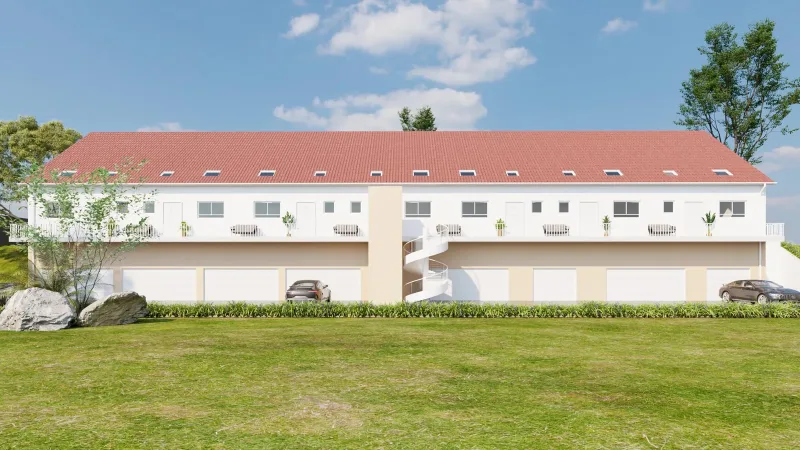
| Commercial exterior view | $1,500 to $4,500 per view |
| High-rise with complex facade and city context | $4,000 to $8,000 per view |
| Architectural animation | $2,200 to $18,000 per finished minute |
If you are pricing exteriors specifically, our 2026 guide to exterior architectural visualization goes view by view, with timelines.
Why two fair quotes can be far apart
A rendering is a small production job. Someone builds or imports the model, sets up materials and lighting, furnishes the scene, renders it and corrects it after you comment. A clean exterior from good drawings and an art-directed interior full of custom joinery are both "one image", but they can be days apart in effort. Six things decide where your project lands.
1. How much has to be built around the building
For exteriors, context is the biggest cost. A house on a lawn is quick. Neighbouring buildings, roads, levels and planting all have to be modelled, and a city block takes far longer than a garden.
2. Level of detail and custom content
Custom furniture, joinery, landscaping, people and fine material work all add hours. A massing image for an early design review needs a fraction of what a brochure cover needs, so decide early whether the image is there to explain or to sell.
3. The quality of what you send
A coordinated Revit or SketchUp model saves hours. PDFs that disagree with each other, or sketches with missing dimensions, force the team to stop and ask, and that time is billed. If your files are rough, say so up front.
4. The number of views
Extra views of a scene that is already modelled cost much less than the first. Four views of one building almost always cost less per image than four separate projects.
5. Revision rounds
Most studios include two or three rounds. A July 2026 pricing roundup from Frame Sixty puts extra rounds at about $100 to $400 each. The expensive changes are the late ones: moving a wall after lighting is approved is close to starting again.
6. Turnaround
Rush work means pulling people off other jobs. The same Frame Sixty roundup puts rush premiums at 25% to 50% on top of the standard price. A realistic deadline is one of the easiest savings you can make.
How studios usually price the work
- Per image: a fixed fee for a defined view. Easy to compare, as long as the quote states the revision rounds.
- Per package: several views of one scheme, sometimes with a 3D floor plan or short animation. Best value when you know everything you need.
- Hourly: for changing scope or ongoing support. Flexible, but a clear brief and fast feedback matter most here.
Many teams use a fixed fee for the defined set of images and an hourly arrangement for anything that comes up later.
Freelancer, local studio or offshore team?
This is the question behind most "why is this quote so high?" threads. Architects on the Archinect forum have reported for years that North American studios charge several times what offshore teams do, while marketplace gigs can start at a few dollars. The difference is rarely the software. It is how much modelling, checking and communication is included.
A very cheap image is often a stock scene with your building dropped in. That can be fine for an early idea. For an image a client signs off, a buyer pays a deposit on, or a planning officer reads closely, it usually has to be rebuilt. The better question is what each quote includes: views, rounds, resolution, file ownership and a named contact.
Is it cheaper to do it in-house?
For design reviews, often yes. If your team already works in Enscape, Lumion, Twinmotion or D5, quick real-time views cost little. The hidden cost is designer time. Deltek's 2026 Clarity study of 896 architecture and engineering firms found firms expecting 9.5% revenue growth this year but only 1.2% staff growth. When every designer hour is already booked, outsourcing the marketing-grade images is usually cheaper than the delay.
How to get an accurate quote
Send the same information to every studio you ask, and the numbers become comparable:
- The drawings or model you will provide, and their format (DWG, PDF, Revit, SketchUp)
- The number of views and what each one is (exterior, interior, aerial, 3D floor plan)
- Two or three reference images for the look you want
- Where the images will be used and at what size
- Your deadline and any fixed presentation date
There is a fuller checklist in how to brief a rendering team.
Ways to spend less without lowering quality
- Lock the design before rendering starts. Mid-render design changes cause most overruns.
- Approve in order: model and camera, then materials, then lighting.
- Send one combined list of comments per round, from one person.
- Order views together, and reuse the model for later views or an animation.
- Use a simpler style for early reviews and keep the full finish for the final marketing image.
Red flags in a quote
Be careful when a quote does not state the revision rounds, does not say who owns the final files, or is dramatically lower than the others with no explanation. A low price that excludes revisions often ends up costing more than a clear, slightly higher one.
How Architive quotes
We read your drawings first, tell you what is missing, and send one written quote that lists every view, the review stages, the revision rounds included and the delivery date. If we miss something we agreed, we fix it at no charge; new directions or changed drawings are quoted before any extra work starts. You can see the work behind those quotes on our architectural visualization page, or send us your brief for a clear number.
Quick answers
How much does an architectural rendering cost in 2026?
Published 2026 studio prices run from about $250 for a 3D floor plan to $600 to $1,800 for an interior view and $1,500 to $4,500 for a commercial exterior. Complex towers can reach $8,000 per view.
How much does an architectural animation cost?
Roughly $2,200 to $18,000 per finished minute, depending on length, camera work and post-production.
How much extra is a rush job?
Expect 25% to 50% on top of the standard price for very short deadlines.
How many revisions are included?
Usually two or three rounds. Extra rounds commonly cost $100 to $400 each, so agree the number in writing.
Why do quotes for the same project differ so much?
Because studios include different amounts of modelling, context, revisions and checking. Compare what each quote includes rather than the headline price.