How to Brief a Rendering Team and Get Better First Drafts
Most disappointing renderings start with a thin brief. Use this checklist to tell your visualization team what they need, and cut revision rounds in half.
In this article
Ask any visualization artist what makes a project run smoothly and they will say the same thing: a good brief. A first draft is only as good as the information behind it. When the brief is thin, the artist guesses, you correct, and each correction costs a day.
This checklist shows how to brief a rendering team so the first draft lands close to what you had in mind.
Start with the purpose of the image
Before any file is sent, answer one question: what is this image for? A planning submission, a client presentation, a sales brochure and a social post all call for different looks. Tell the team who will see it and what you want them to feel or decide. One sentence is enough: "This is for a homeowner deciding between two kitchen layouts."
Send the right source files
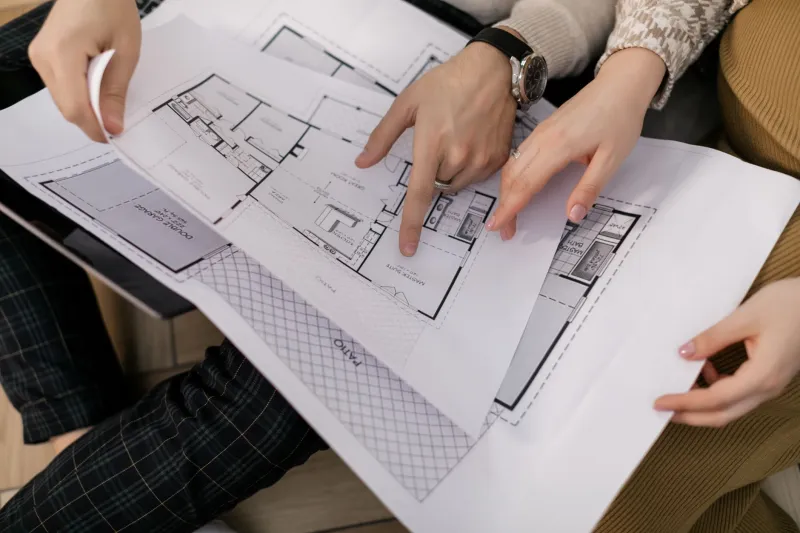
- Drawings: plans, sections and elevations in DWG or a clear PDF, with dimensions and levels.
- A 3D model if you have one (Revit, SketchUp, Rhino), plus a note about which parts are final.
- Site information: photos of the surroundings, orientation and any context that must appear.
- Material and product choices: finish schedules, product links or sample photos.
If the files are incomplete, say so. It is far better to flag "the roof is not final" than to have it modeled and redone.

Show, do not only tell
Words like "modern", "warm" or "luxurious" mean different things to different people. Three to six reference images communicate more than a page of adjectives. For each one, add a short note on what you like about it: the light, the material palette, the camera angle, the level of greenery.
It also helps to include one example of what you do not want. Rejecting a style early is quicker than correcting it later.
Define the camera
Mark the viewpoint on a plan or sketch. Mention the height (eye-level, raised, aerial), the direction, and anything that must be in or out of frame. For interiors, say which wall or feature is the focus.
Describe the light and atmosphere
- Time of day: bright midday, soft morning, dusk with interior lights on.
- Weather and season: clear sky, overcast, autumn leaves.
- Mood: calm and minimal, lively and populated, dramatic and moody.
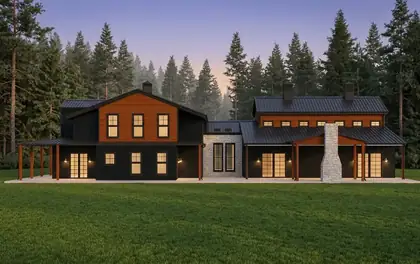
A dusk image with glowing windows is a very different job from a bright daytime view, so choose deliberately.
Give practical details
- Format and size: screen only, or print? Landscape or portrait?
- Deadline: including any hard presentation date.
- Revisions: how many rounds are included, and who approves each stage.
- Confidentiality: whether an NDA is needed.
Plan the feedback process
A simple order of approval keeps everyone calm and keeps costs down:
- Massing and camera - is the shape, view and composition right?
- Materials and furnishing - are the finishes and objects correct?
- Lighting and mood - is the atmosphere what you want?
- Final polish - small corrections only.
Combine all comments for each stage into one message, mark them on the image if you can, and avoid reopening decisions that were already approved.
The best briefs are not long. They are specific: one purpose, a few strong references, a marked camera and a clear deadline.
A one-page brief template
If you want a shortcut, copy this into an email:
- Project and purpose of the image
- Files attached, and what is final or not
- Views required, with camera marked
- Three to six references, with notes
- Time of day, mood and season
- Size, format and deadline
Let us help you shape the brief
If you are not sure what to include, that is fine. When you contact Architive, we review what you have and tell you what is missing before any work starts. You can also look at our architectural visualization work to see the range of styles we produce.